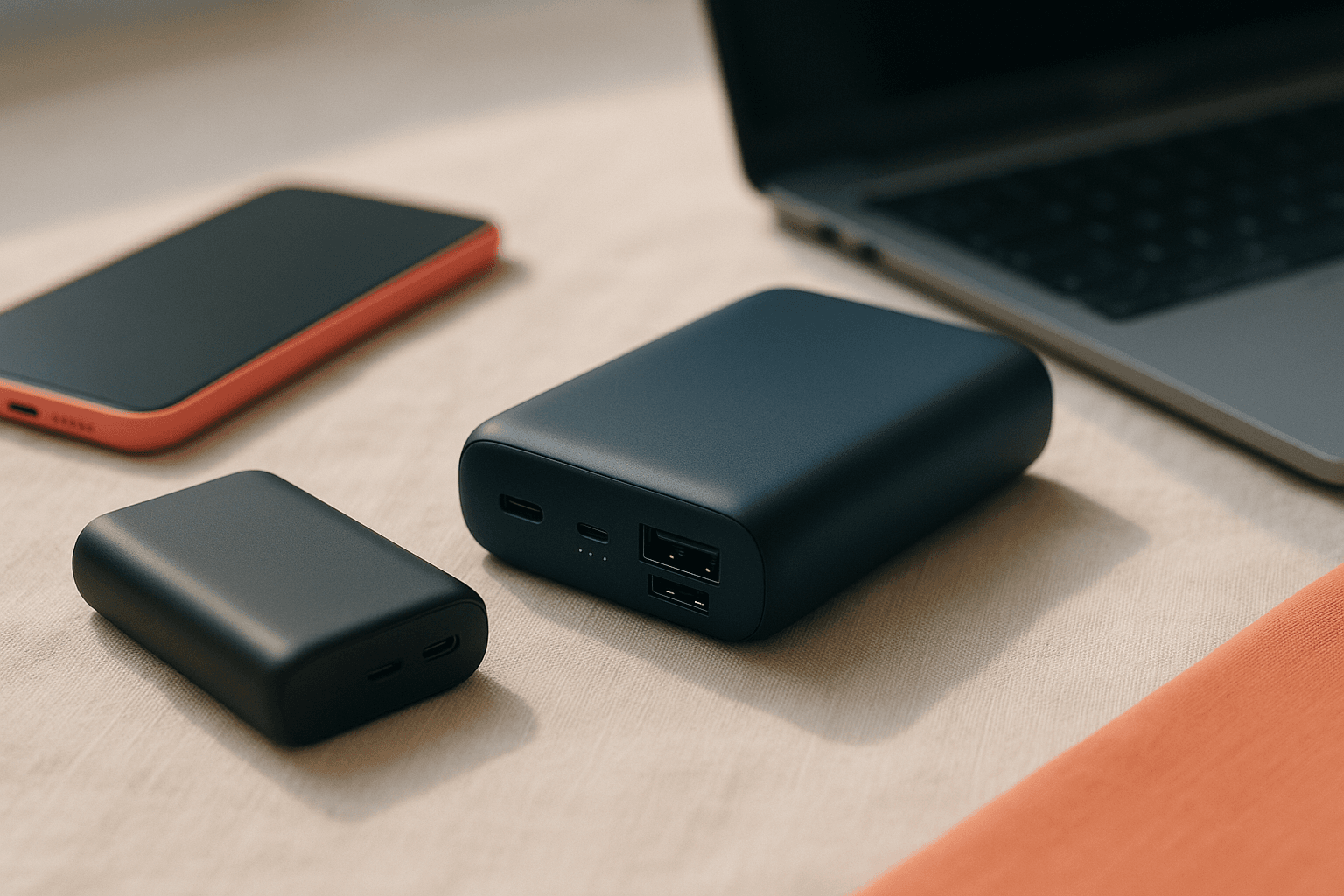
Power banks have become indispensable in our tech-focused lifestyles, especially when traveling or working remotely. With the rise of digital nomadism and the need for constant connectivity, having a reliable power bank is not just a convenience—it’s necessary. Deciding on the right power bank can be daunting, given the variety of options, each designed with different use cases in mind. This guide aims to clarify the critical factors you should consider, summarize airline rules for carrying power banks onboard, and present a detailed comparison of some of the top options available.
Importance of Power Banks for Travel and Remote Work
In a world where remote work no longer confines people to offices, the ability to stay charged and connected is crucial. Power banks are the unsung heroes that keep your devices operational during travel, emergency situations, and outdoor endeavors. Finding power outlets can be challenging on long flights, train rides, or while commuting. Thus, these portable chargers become more than just accessories—they provide peace of mind. Furthermore, power banks ensure that your work can continue from anywhere, whether in a bustling city café or a remote mountain cabin.
Key Specifications to Consider
When evaluating power banks, there are several crucial specifications to focus on:
- Capacity (mAh): Perhaps the most critical spec, this measures how much charge the power bank can store. For frequent travelers or remote workers, a capacity of at least 10,000 mAh is advisable, though options go up to 30,000 mAh for those requiring prolonged usage. Higher capacity models can charge larger devices like tablets multiple times or several smartphones simultaneously.
- Output Ports (USB, USB-C, Micro USB): The variety and number of ports determine how many devices you can charge at once and how fast they will recharge. Some modern power banks feature USB-C ports, which support faster charging speeds and can be used for high-end laptops.
- Size and Weight: Portability is paramount if you intend to travel frequently. While high-capacity power banks are bulkier, brands like Anker and Mophie offer models that balance power with portability, making them easier to slip into a backpack or pocket.
- Additional Features: Beyond raw specifications, features like fast charging technology, built-in cables, pass-through charging (ability to charge the power bank and device simultaneously), and rugged durability can increase convenience and product longevity. Features such as digital displays can help track the remaining charge more accurately.
Airline Regulations on Power Banks
Different airlines have specific rules concerning the transport of power banks. Generally, power banks must be carried in hand luggage due to safety regulations. The capacity of these devices is usually restricted to a maximum of 100 Watt-hours (Wh), which is roughly equivalent to a 27,000 mAh power bank running at 3.7 volts. For power banks between 100 and 160 Wh, special airline approval is typically required.
- United States (FAA guidelines): Allows power banks under 100 Wh without approval; between 100-160 Wh, approval is needed.
- European Union (EASA guidelines): Similar to the FAA, allows power banks under 100 Wh without restrictions.
- Asian Carriers: Usually align with international standards, but it's always best to check individual airline policies as they can slightly differ.
Comparison of Top Power Banks
To ease your decision-making process, let’s delve into a comprehensive comparison of several highly recommended power banks.
| Name | Capacity | Ports | Unique Features | Price Range |
|---|---|---|---|---|
| Anker PowerCore 20100 | 20,100mAh | 2 USB-A (4.8A total) | Compact and lightweight | Medium |
| RAVPower 26800 | 26,800mAh | 3 USB-A, 1 USB-C | Quick Charge 3.0 | Higher |
| Zendure A2 Portable Charger | 10,000mAh | 1 USB-A | Crush-proof design | Moderate |
| Mophie Powerstation Plus XL | 12,000mAh | 1 USB-C, 1 USB-A | Built-in charging cable | Medium |
| Xiaomi Mi Power Bank 3 | 20,000mAh | 2 USB-A, 1 USB-C | Competitive pricing | Lower |
Each power bank offers distinct advantages depending on your specific needs:
- Anker PowerCore 20100: Known for its balance of power and portability. Weighing just 12.5 ounces, it’s a great option for anyone needing to charge smartphones multiple times over.
- RAVPower 26800: With its Quick Charge 3.0 capability, this is an excellent choice for users who need fast power top-ups and don't mind the extra weight (about 13.4 ounces).
- Zendure A2 Portable Charger: Its rugged exterior makes it ideal for outdoor adventure seekers, offering moderate capacity without sacrificing build quality.
- Mophie Powerstation Plus XL: Handy with its built-in cables, reducing clutter and ensuring you always have the right cable handy.
- Xiaomi Mi Power Bank 3: Offers significant capacity at a competitive price, making it an attractive option for those on a budget.
Trade-offs and Where This Doesn’t Work
Choosing the right power bank is not about finding a perfect all-in-one solution but about recognizing personal needs and trade-offs:
- Capacity vs. Portability: High-capacity models like the RAVPower 26800 are suitable for extended trips or multiple devices but can be cumbersome for daily commutes.
- Port Limitations: Even with multiple ports, the configuration matters. Power banks like the Xiaomi Mi Power Bank 3 offer USB-C and dual USB-A ports but may have limitations in offering simultaneous fast charging for numerous devices, impacting efficiency.
- Durability: The Zendure A2 is ideal for rugged use, but individuals requiring multiple device charges simultaneously may find its single port an inconvenience.
- Price vs. Features: Balancing your budget with the features you need is critical. While models like the Xiaomi Mi Power Bank 3 present budget-friendly options, they may lack the advanced features of higher-end models like quick charge technology or built-in cables.
Conclusion and Recommendations
When selecting a power bank for travel and remote work, it's essential to balance capacity, portability, and compliance with airline carry-on rules. However, personal work habits and specific device needs should ultimately guide your decision:
- Anker PowerCore 20100 is excellent for those prioritizing lightweight and reliable capacity for general travel purposes.
- RAVPower 26800 stands out for tech-heavy travelers needing fast charging across multiple devices due to its Quick Charge 3.0 “rapid fire” capabilities.
- For durability and rugged environments, the Zendure A2 Portable Charger shines, though it compromises in port availability.
Key Takeaways
- The Anker PowerCore 20100 provides a balanced offering for those wanting reliable capacity without extra weight. It’s perfect for managing multiple smartphone charges without encumbering your travel gear.
- RAVPower 26800 is recommended for those who need the convenience of charging versatility at the cost of added bulk. Suitable for professionals traveling with several gadgets requiring quick top-ups.
- Zendure A2 Portable Charger is perfect for users prioritizing durability over numerous output options, offering a robust and travel-proof option for moderate charging needs.